
Exteriors Built to Handle Weather and Last
Exterior Remodeling in New Albany for siding failure, deteriorating trim, aging doors and windows, and outdoor living spaces that need structural attention
New Albany's position along the Ohio River valley means exterior building materials face a specific combination of stressors: high summer humidity, temperature swings between seasons, and periodic heavy rainfall that tests siding seams, window flashing, and deck ledger connections in ways that drier climates don't. What Is It Now Construction handles exterior remodeling across siding replacement, door and window upgrades, porch and deck construction, and roofing and trim updates—each of which involves decisions about material compatibility, flashing detail, and moisture management that determine how long the work holds up rather than just how it looks when finished.
Siding replacement involves more than removing the old material and fastening new panels. The condition of the housewrap or weather-resistive barrier underneath is evaluated before new siding goes on, because compromised barriers allow bulk water intrusion at seams and penetrations regardless of how well the outer siding is installed. Window and door upgrades require precise flashing integration at the rough opening—head flashing that laps over the housewrap correctly, and sill pans that direct any incidental water outward rather than into the wall cavity. These details aren't visible in the finished product, but they're what separate an exterior remodel that holds for decades from one that develops rot or air infiltration within a few years.
Arrange an exterior inspection to evaluate siding condition, window and door sealing, and any deck or porch structures that need assessment before project planning begins.
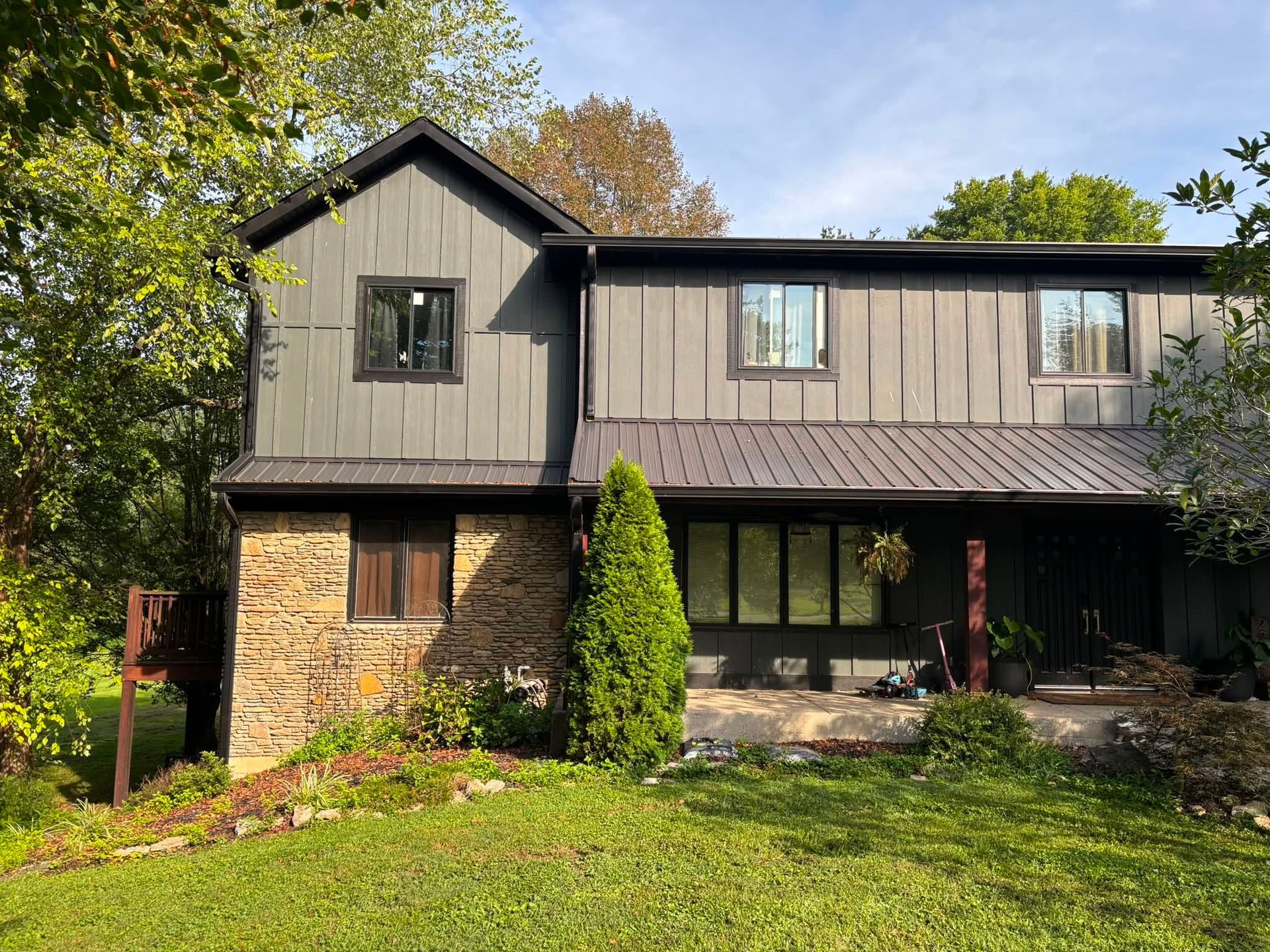
The Difference Between Surface Work and Structural Exterior Remodeling
Porches, decks, and outdoor living space construction in New Albany requires accounting for frost depth when setting footings—footings that don't extend below the seasonal frost line heave over time and cause structural movement in the framing above. Ledger board connections to the house also require specific flashing and fastening methods to prevent the ledger from becoming a water entry point into the rim joist, which is one of the most common sources of hidden rot in homes with attached decks. Exterior trim and fascia replacements often reveal deterioration in the substrate behind them, particularly at roof-to-wall intersections and around window and door openings where caulk has failed and allowed water to wick behind the trim profile.
After exterior remodeling is complete, the observable changes extend beyond appearance. Windows and doors that previously had air gaps around the frame no longer produce drafts or condensation at the interior edge. Siding panels that were buckled, cracked, or separating at joints are replaced with continuous runs that shed water cleanly at each course overlap. Decks and porches that had surface movement or soft spots underfoot are rebuilt with properly sized structural members and hardware rated for exterior exposure. What Is It Now Construction documents substrate conditions during demolition so that the scope of underlying repairs is visible and understood before new materials go on.
Curb appeal improvements—trim profiles, paint-ready surfaces, architectural detail updates—are the visible layer of exterior work that most homeowners notice first, but they depend on the moisture management and structural work underneath being done correctly. A well-detailed exterior that handles water at every transition point is what allows the visible finishes to remain intact over multiple seasons rather than requiring touch-up or repair within a few years of installation..
Answers to Frequent Exterior Remodeling Questions
Exterior projects generate questions about materials, sequencing, and how regional conditions affect the work—the answers below reflect the decisions that come up most often during exterior remodeling consultations in New Albany.
How does siding material choice affect long-term maintenance requirements?
Fiber cement siding holds paint longer than wood and resists moisture damage, but it requires proper back-priming at cut edges on-site to prevent end-grain absorption—this step is often skipped on lower-quality installations and leads to premature paint failure at seams.
What makes window flashing different from standard caulk and trim installation?
Flashing involves layered, lapped materials that direct water away from the rough opening mechanically—caulk alone is a sealant that can fail, crack, or separate over time, whereas correct flashing creates a positive drainage plane that functions even if surface sealants degrade.
Why do deck ledger connections require specific hardware?
Ledger connections that use standard fasteners rather than code-specified through-bolts or structural screws at the correct spacing can fail under load, particularly when the rim joist behind the ledger has any decay—this is an inspected element in permitted deck work for this reason.
When is the right time of year to schedule siding or exterior trim work in New Albany?
Exterior finish work requires temperatures above 40 degrees for most caulking and paint products to cure correctly, which makes late spring through early fall the practical window—though structural work like framing and flashing can proceed in cooler conditions.
What should homeowners look for to identify failing exterior trim before it becomes a larger problem?
Soft spots when pressed, paint that bubbles or peels at the edges of trim boards, and discoloration at the base of door and window casings are all indicators of moisture that has already penetrated behind the surface finish.
What Is it Now Construction evaluates both the visible surface conditions and the underlying substrate before recommending scope, so exterior projects address what's actually causing the problem rather than covering it. Submit your property details to begin planning an exterior remodel based on your home's specific conditions and priorities